Frequency Capabilities of a Microphone
All microphones have a certain frequency range that they are able to pick up. It is largely accepted that the average human hearing has a frequency range of 20Hz to 20KHz, sounds below or above this we are not able to audibly detect. A microphones frequency range can usually be found out on the manufacturers website in the microphones specifications section. For example a Shure SM57 can pick up frequencies between 40Hz to 15KHz (Shure, 2009-2015) Where as a Nuemann U87 Ai can pick up between 20Hz to 20Khz. (Nuemann, n/a) Although both microphones have there different uses in terms of overall capture the U87 Ai would give the most accurate results without other figures taken into consideration.
Frequency Response Graphs
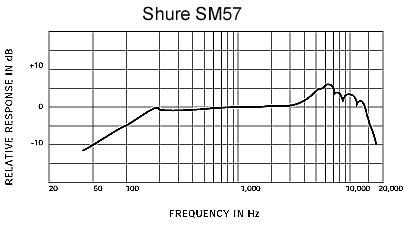
 Frequency response graphs show how the microphone reacts at certain frequencies. As seen in the diagram to the right of the Shure SM57's frequency response. This graph is made by sweeping a constant on axis input signal through the whole frequency range. (Huber and Runstein, 2014) Think of the graph like an equaliser except the boosts and cuts in frequency are predetermined by the microphone itself. If we look again at the diagram it shows us that the SM57 is at its flattest at around 1KHz, gives a boost in response after around 3KHz and has a roll off after around 10KHz and below around 200Hz. So in conclusion the most accurate to life signal from the Shure SM57 is between 200Hz to 1Khz.
References:
- Huber, DM Runstein, RE (2014). Modern Recording Techniques. 8th ed. Burlington: Focal Press. p121.
- Neumann. (N/A). Switchable Studio Microphone U 87 Ai. Available: https://www.neumann.com/?lang=en&id=current_microphones&cid=u87_data. Last accessed 18th Feb 2015.
- Shure. (2009-2015). SM57 Dynamic Instrument Microphone. Available: http://www.shure.co.uk/products/microphones/sm57. Last accessed 18th Feb 2015.

No comments:
Post a Comment